
If you have been scrolling listings this fall and noticed more red “price reduced” tags than usual, you are not imagining it. Sellers are cutting asking prices at the highest rate seen in years, and the cuts are spreading across almost every region of the country.
That sounds like unambiguously good news for buyers. It is mostly good news, but there is a catch, and it matters a lot if you are working toward ownership through a rent-to-own or lease-purchase agreement. Here is what the numbers show, why it is happening, and how to use it.
What The Numbers Show
Three different data sources are pointing the same direction.
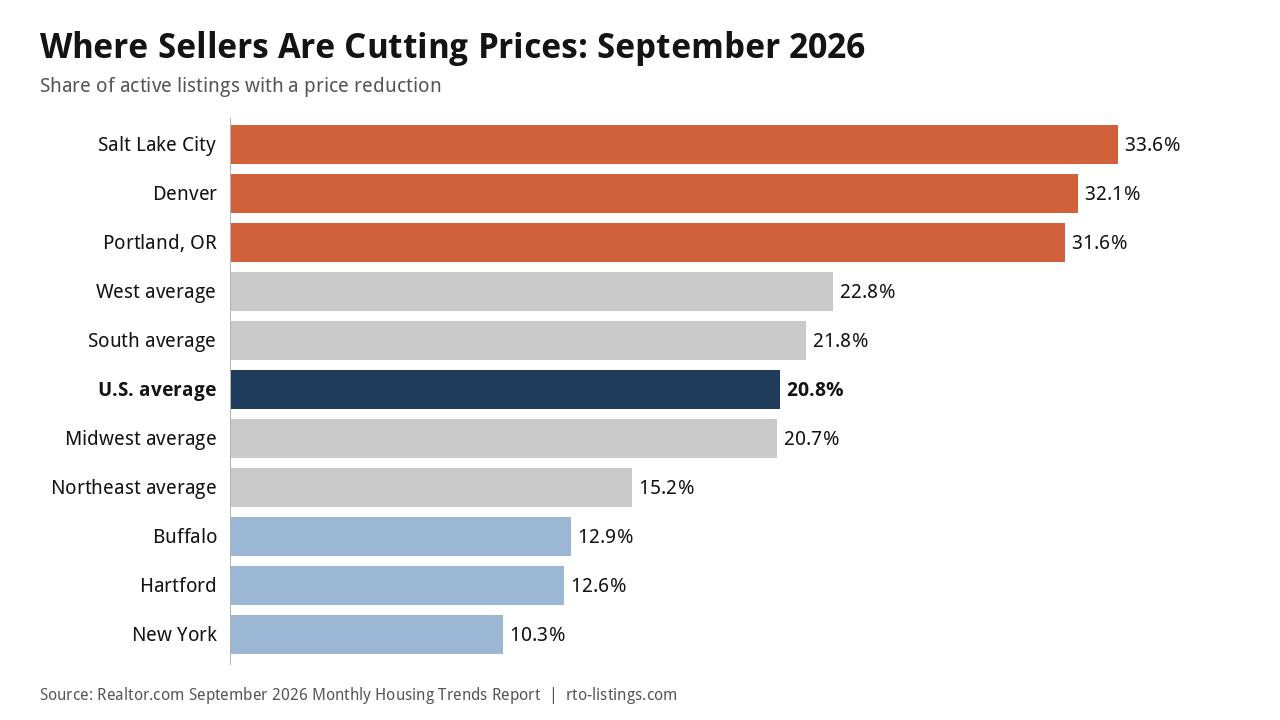
Realtor.com found that 20.8 percent of active listings had a price reduction in September, up almost a full percentage point from a year earlier. That is the highest September reading since 2018, and the first month this year that price cuts clearly outpaced 2025. All four regions of the country posted a higher share than last year, and 36 of the 50 largest metro areas did too, up from 27 in August.
Redfin measured about 21 percent of sellers cutting their price during the four weeks ending in September, the highest share for that time of year since it started tracking in 2022.
Parcl Labs puts the figure much higher, at roughly 42 percent of active listings. That is not a contradiction. Realtor.com and Redfin count homes that cut their price during the month. Parcl Labs counts every listing currently on the market that has been cut at any point since it was listed. Both are useful. The first tells you how fast sellers are giving ground, and the second tells you how many of the homes you are looking at right now have already come down.
Where Sellers Are Cutting Most
The pressure is not even. The West saw the biggest jump from last year, with 22.8 percent of listings reduced. The South came in at 21.8 percent and the Midwest at 20.7 percent. The Northeast, where inventory is still tight, was well behind at 15.2 percent.
Among large metros, Salt Lake City led with a third of its listings reduced, followed closely by Denver and Portland, Oregon, both above 31 percent. At the other end, New York, Hartford, and Buffalo all sat between roughly 10 and 13 percent.
The practical takeaway: national headlines describe an average. Your negotiating power depends on your local market, so check how many listings in your target area show a reduction before you assume you have the upper hand.
Why Sellers Are Cutting Now
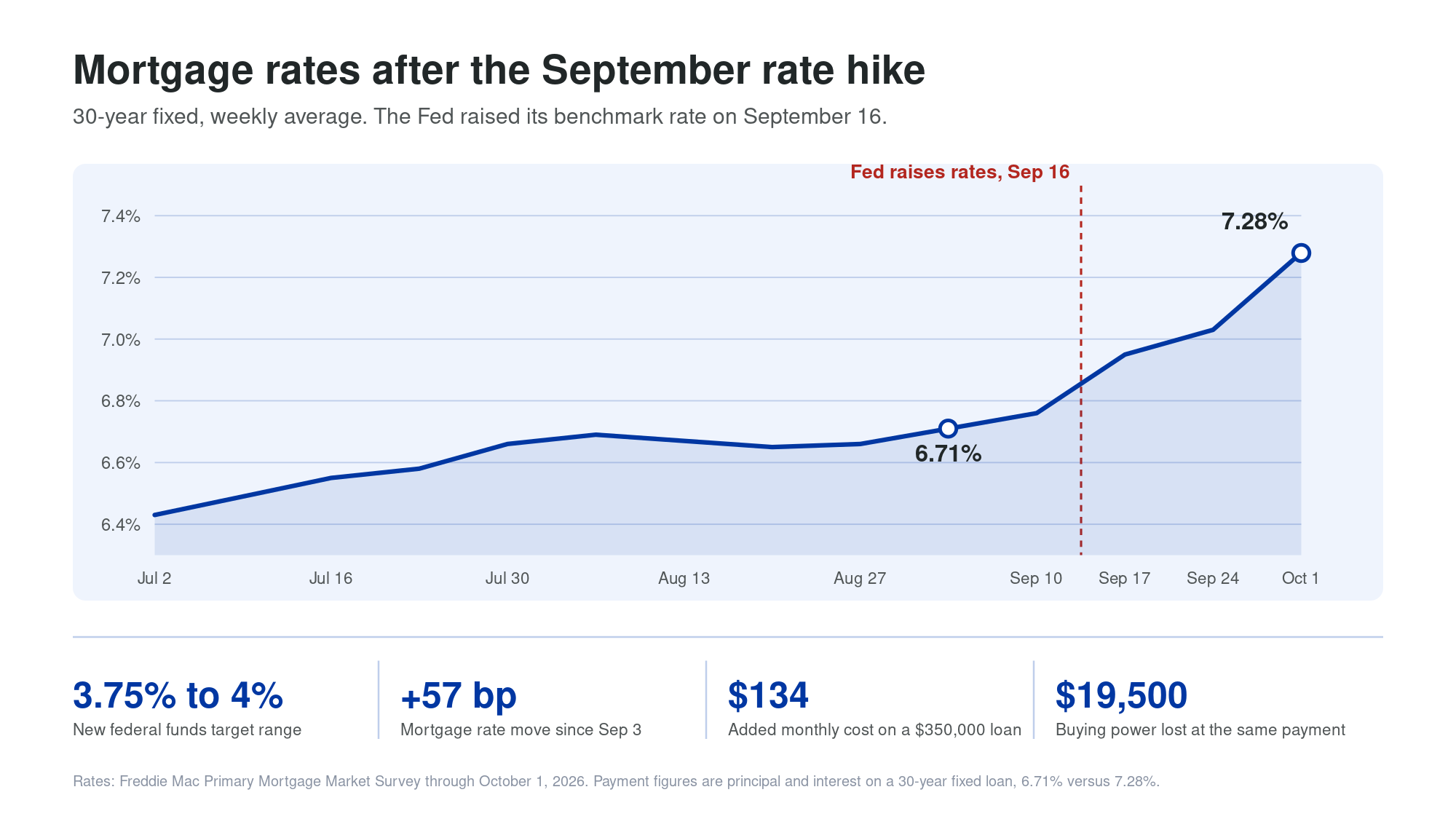
The short answer is mortgage rates. The 30-year fixed average climbed above 7 percent in late September for the first time since January 2025 and reached 7.28 percent in Freddie Mac’s October 1 survey, up from about 6.34 percent a year earlier. We covered what drove that jump in our breakdown of the September Fed rate hike.
Many sellers set their asking price back when buyers were shopping with rates in the low 6s. At over 7 percent, the same buyer qualifies for less house, so listings priced for the old math sit. At the same time, inventory has been building, which gives buyers more alternatives and less reason to stretch. Pending sales have softened as well. When buyers cannot pay more, price is the thing that has to give.
Not every seller is responding the same way. Realtor.com reports that fewer sellers are pulling their homes off the market and more are lowering the price instead. Redfin, on the other hand, believes some owners would rather wait or delist than accept less. Either way, the sellers who stay on the market are increasingly willing to deal.
A Price Cut Does Not Fully Offset Higher Rates
This is the catch. Run the numbers on a $350,000 home with 10 percent down at 7.28 percent:
- At full price, principal and interest come to about $2,155 a month.
- After a 5 percent cut to $332,500, the payment drops to about $2,048. That saves roughly $108 a month, plus $1,750 less needed for the down payment.
- But the same $315,000 loan at last year’s 6.34 percent rate would have cost about $1,958 a month. The rate increase alone added nearly $200.
In other words, a typical 5 percent price cut wins back only about half of what higher rates took away. Price cuts make homes more affordable than they were a month ago, but not more affordable than they were a year ago. The real advantage for buyers right now is leverage: more choice, more time, and sellers who are ready to negotiate on more than just the sticker price.
What This Means For Rent-To-Own Buyers
A softer market changes the rent-to-own conversation in a few important ways.
You have more room to negotiate the deal terms
A seller who has already cut the price once or twice is usually more flexible on everything else too. That includes the purchase price written into your agreement, the size of the option fee, how much of your rent is credited toward the purchase, and the length of the lease. If you are not sure what is reasonable, start with our guides to option fees and rent credits.
More sellers may be open to rent-to-own
When a home sits and the price keeps coming down, a lease-purchase arrangement starts to look attractive to the owner. It brings in monthly income, puts a motivated occupant in the house, and sets up a sale without another round of cuts. That can mean more rent-to-own opportunities, including on homes that were never originally offered that way.
Be careful about locking in today’s price
Most rent-to-own agreements set the purchase price up front. In a rising market that works in your favor. In a softening market it can work against you. If prices keep slipping, you could reach the end of your lease with the right to buy a home for more than it is worth, which can also make it harder to get a mortgage, since lenders lend against the appraised value.
There are ways to protect yourself. You can negotiate a price that already reflects current market weakness, ask for a shorter term, or propose that the final price be set by an appraisal when you exercise your option. Whatever you agree to, make sure it is spelled out clearly. Our guide to what is inside a lease-purchase contract walks through the clauses to look for, and it is worth having a real estate attorney review the agreement before you sign.
Use the time to strengthen your credit
Rates will not stay at any one level forever. The buyers in the best position when they move are the ones whose credit and savings improved during the lease. Higher scores mean better rates when you finally finance the purchase. See our breakdown of credit score requirements for rent-to-own buyers for where to aim.
How To Read A Price Cut On A Listing
Not every reduction means the same thing. A single small cut in the first couple of weeks often just means the seller started a little high. Multiple cuts over several months, especially on a home that has been listed for 60 days or more, usually signal a seller who is ready to talk. Compare the original list price to the current one, check the price history, and look at what similar homes nearby actually sold for, not just what they are asking. And if a home has been cut repeatedly while similar homes are selling, ask why. Sometimes the answer is price. Sometimes it is the condition of the house.
The Bottom Line
Price cuts are at multi-year highs, and in many markets buyers have more bargaining power than at any point in the last several years. But lower prices have not erased the impact of higher rates, so the win comes from negotiating well rather than waiting for a bargain to fall into your lap. For rent-to-own buyers, that means pushing for better terms, being thoughtful about the purchase price you lock in, and using the lease period to get financially ready for the day you buy.
Sources: Realtor.com September 2026 Monthly Housing Trends Report; Redfin; Parcl Labs; Freddie Mac Primary Mortgage Market Survey. Payment examples are principal and interest only and exclude taxes, insurance, and HOA dues.
Leave a Reply