
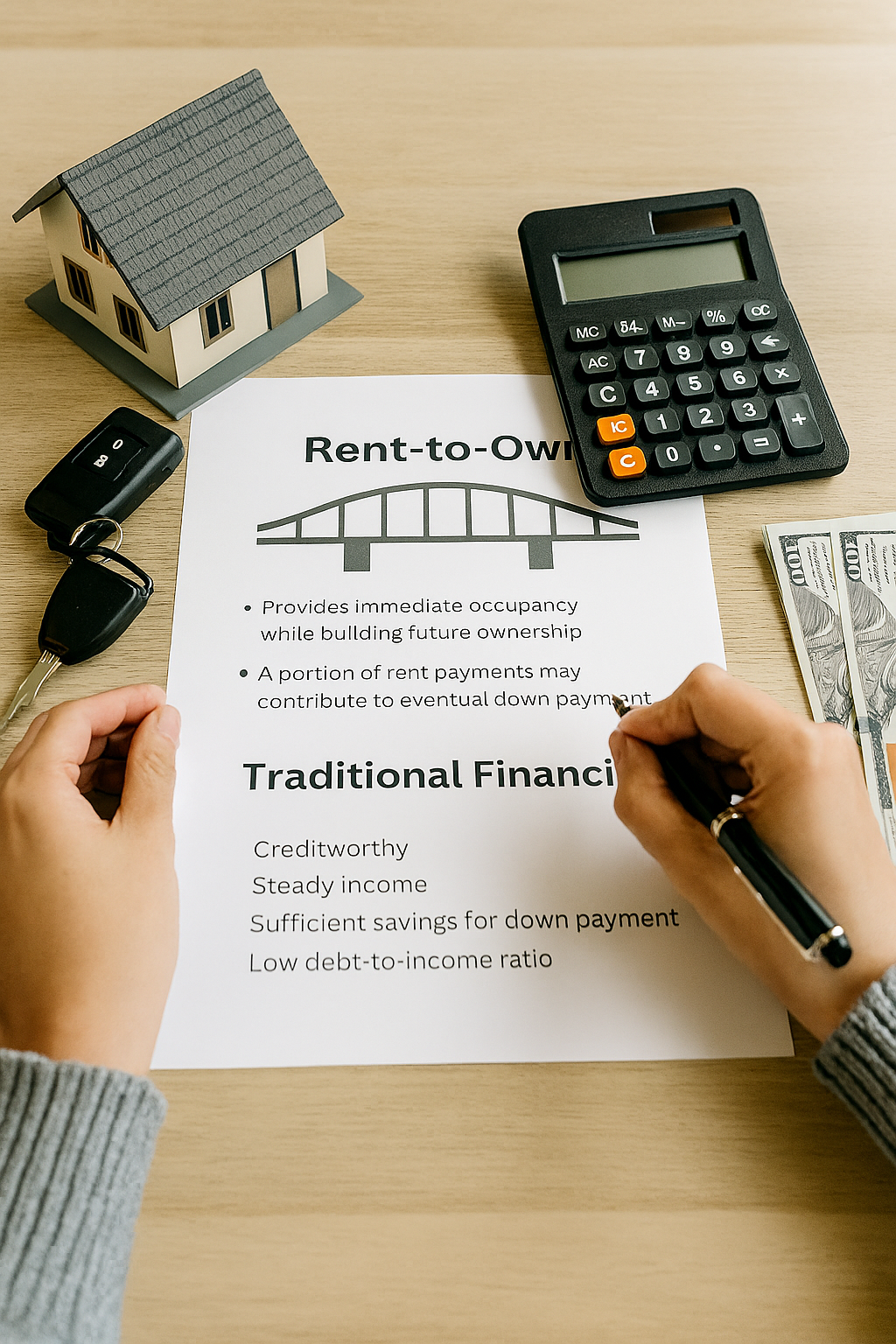
Rent-to-own agreements have become a talking point for families and individuals who want to own property but struggle to qualify for a traditional mortgage. Rising home prices, stricter lending standards, and the challenge of saving for a down payment have made ownership harder for many. Rent-to-own offers a middle path. It allows tenants to live in a home while working toward eventual purchase. When used wisely, this option can serve as a bridge to traditional financing.
How Rent-to-Own Agreements Function
The structure is straightforward. A tenant signs a lease with the option to buy the property later. Monthly rent payments may include a portion credited toward the purchase price. Over time, the tenant builds value that resembles equity.
This arrangement appeals to those who need time to improve credit scores or save for closing costs. It also helps families settle into a home before securing long-term financing. The model combines the stability of renting with the forward momentum of ownership.
Benefits of Rent-to-Own
Several advantages make rent-to-own appealing:
- Immediate occupancy: Tenants move into the property right away, enjoying stability while planning for ownership.
- Credit improvement window: The lease period gives time to raise credit scores, making mortgage approval more likely.
- Savings mechanism: Rent credits function as forced savings, reducing the eventual purchase price.
- Test drive the home: Living in the property before buying allows tenants to evaluate the neighborhood and condition.
These benefits provide structure for households that feel locked out of the traditional market.
Challenges and Risks
Despite the appeal, rent-to-own carries risks. Monthly payments are often higher than standard rent. If the tenant fails to buy, those extra payments may be lost. Property maintenance responsibilities can also fall on the tenant, even before ownership.
Contracts vary widely, and some include unfavorable terms. Buyers must read agreements carefully and seek legal advice. Without caution, the dream of ownership can turn into financial strain.
Preparing for Traditional Financing
Rent-to-own should be viewed as a stepping stone, not a permanent solution. Tenants must use the lease period wisely. Key steps include:
- Improve credit scores: Pay bills on time, reduce debt, and monitor credit reports.
- Build savings: Beyond rent credits, set aside funds for closing costs and emergencies.
- Document income: Lenders require proof of stable earnings. Keep records organized.
- Limit new debt: Avoid large purchases that increase debt-to-income ratios.
By focusing on these areas, tenants position themselves for mortgage approval when the option period ends.
The Role of Lenders
Traditional lenders view rent-to-own with mixed feelings. Some recognize it as a valid path to ownership, while others remain cautious. What matters most is the borrower’s financial profile at the time of application. Strong credit, steady income, and manageable debt outweigh the rent-to-own history.
Tenants should maintain open communication with potential lenders. Understanding requirements early helps align financial planning with mortgage standards.
Legal and Compliance Considerations
Rent-to-own agreements involve complex legal details. Contracts must outline purchase terms, rent credits, maintenance duties, and timelines. Ambiguity can lead to disputes.
One overlooked issue is compliance with local and state regulations. Housing laws differ across regions, and agreements must meet specific standards. Buyers and sellers who ignore these rules risk penalties or invalid contracts. Some arrangements may even be considered predatory if they exploit tenants.
It is important to consult professionals familiar with local housing law. Attorneys and real estate experts can identify regional compliance traps that might otherwise go unnoticed. This step protects both parties and ensures the agreement supports a fair path to ownership.
When Rent-to-Own Makes Sense
Rent-to-own is not for everyone. It works best for tenants who:
- Have stable income but need time to improve credit.
- Plan to stay in the property long term.
- Are disciplined about saving and budgeting.
- Understand the legal and financial obligations involved.
For these households, rent-to-own can provide structure and opportunity. It bridges the gap between renting and buying, offering a clear path forward.
Alternatives to Consider
While rent-to-own is one option, buyers should explore alternatives. Government-backed loans, such as FHA or VA programs, often require lower down payments. Some lenders offer flexible credit requirements. Shared equity arrangements or family assistance may also help.
Comparing options ensures that rent-to-own is chosen for the right reasons, not out of desperation.


Leave a Reply