
The U.S. housing market in the fall of 2026 is neither booming nor collapsing. It is stuck in a slow grind. Mortgage rates have drifted back toward 7 percent, home prices are still inching higher, and sales are running at roughly the same subdued pace they have held for three years. For renters weighing a move toward ownership, the picture is frustrating but not hopeless. This guide lays out where the market stands today, what the numbers actually say, and what it all means if you are considering a rent-to-own path.
Mortgage Rates: A Brief Dip, Then a Steady Climb
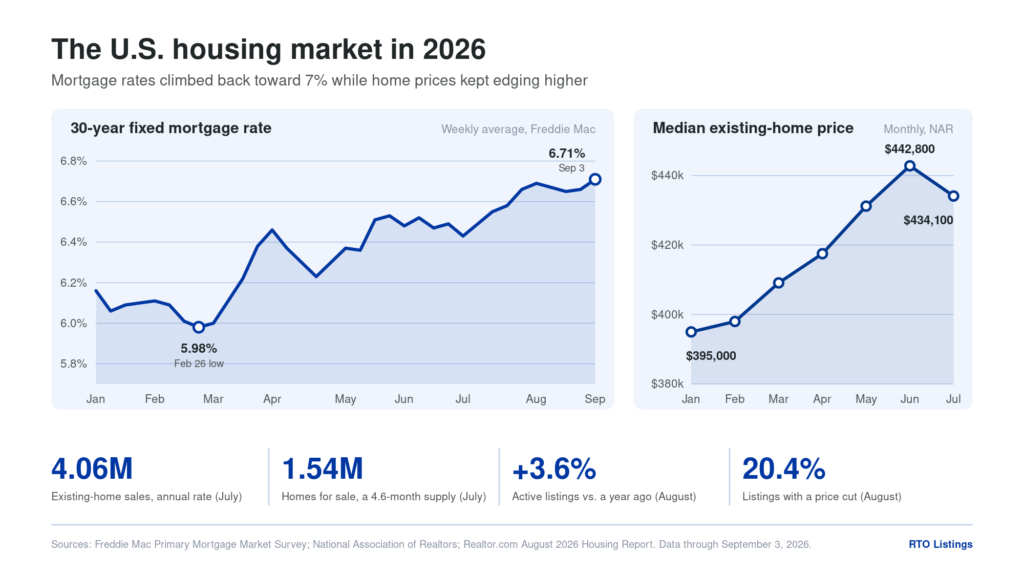
The story of 2026 so far is the mortgage rate that got away. The average 30-year fixed rate started the year near 6.16 percent and slid to 5.98 percent in late February, the first time it had dipped below 6 percent in more than three years. Buyers who locked in during that window got the best deal of the year.
It did not last. Rates reversed in March and have climbed almost every month since. Freddie Mac’s September 3 survey put the 30-year fixed at 6.71 percent, up from 6.50 percent a year earlier. The Federal Reserve has held its benchmark rate steady all year, and three officials voted for a rate increase at the July meeting, which has kept bond markets nervous. Forecasters at Fannie Mae and the Mortgage Bankers Association expect rates to settle between 6.4 and 6.5 percent through the end of the year, which would be an improvement but not a game changer.
Home Prices: Still Rising, but Barely
Nationally, prices have not fallen. The median existing-home price was $434,100 in July, up 2.0 percent from a year earlier, according to the National Association of Realtors. That marked 37 straight months of annual gains. Prices followed their usual seasonal arc this year, climbing from $395,000 in January to a record $442,800 in June before easing in July.
Look beneath the headline, though, and the momentum is clearly fading:
- The S&P Cotality Case-Shiller National Index was up just 0.8 percent year over year in April, the weakest growth in years.
- The median asking price on Realtor.com fell to $424,500 in August, down 1.3 percent from a year ago and the tenth consecutive month of annual declines in list prices.
- The median price of a newly built home dropped to $393,800 in July, the lowest since 2021, as builders shifted toward smaller, cheaper homes.
- Regional gaps are wide. Prices in the Northeast rose 5.2 percent over the year, while the West gained only 0.2 percent. Metros like Austin, Tampa, and Memphis saw asking prices fall 6 to 10 percent.
In plain terms, sellers are no longer in control. Prices are flat to slightly positive in most of the country and falling in the markets that overheated during the pandemic.
Inventory: More Homes, More Patient Sellers
Buyers have more to choose from than they did a year ago. Realtor.com counted about 1.14 million active listings in August, up 3.6 percent from August 2025 and the fastest annual growth of the year. The Midwest and Northeast led the way with inventory gains of roughly 10 percent, while the South, which added the most homes during the last cycle, grew just 1.1 percent.
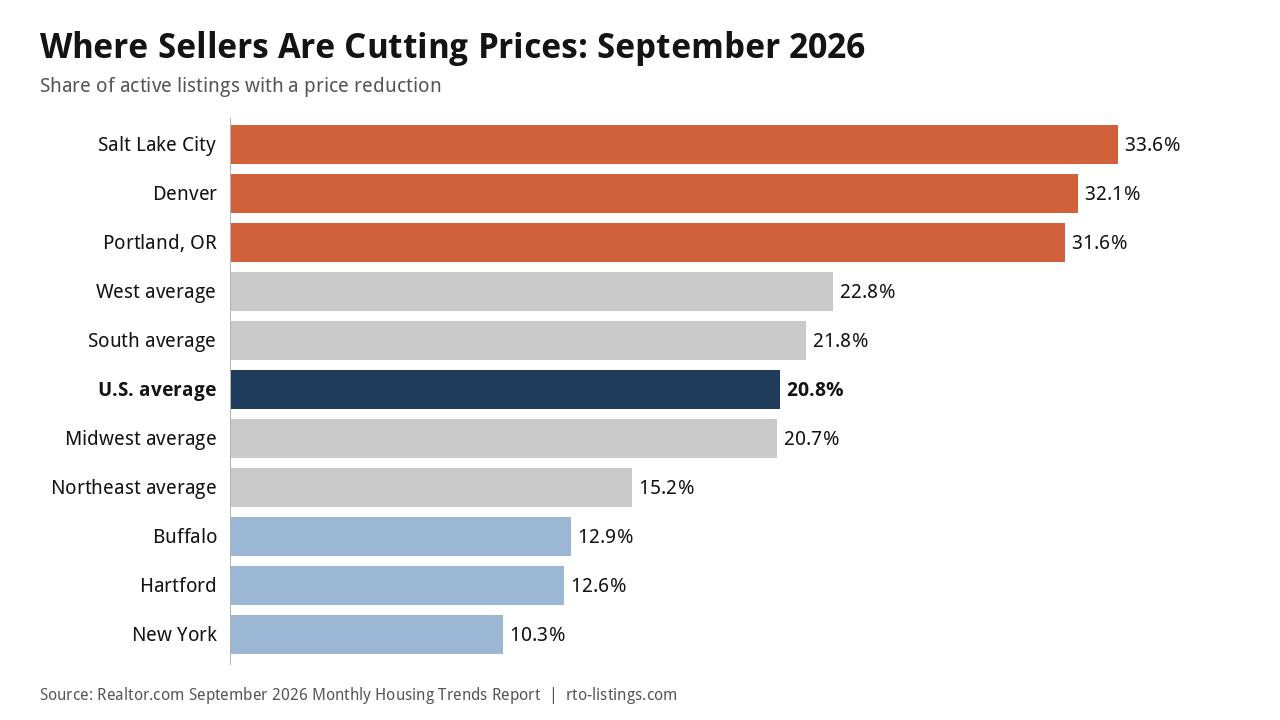
Homes are also sitting longer. The typical listing spent 60 days on the market in August, and 20.4 percent of active listings had taken a price cut. In some metros, including Denver, Portland, and Salt Lake City, nearly a third of sellers had reduced their asking price. At the same time, fewer sellers are giving up: delistings were down 12.6 percent from last year, a sign that owners are choosing to wait out the market rather than pull their homes.
Still, this is not a glut. Total existing-home inventory stood at 1.54 million in July, a 4.6-month supply. A balanced market is usually considered five to six months, so conditions are closer to neutral than to a true buyer’s market.
Sales Activity: Stable but Stuck
Existing-home sales ran at a seasonally adjusted annual rate of 4.06 million in July, down 1.7 percent from June but slightly above the year-earlier pace. That is roughly the level the market has held since 2023, and well below the 5 to 6 million range that was normal before the pandemic. Pending sales, which track signed contracts, fell 2.3 percent in July to the lowest reading since January, so the August and September closings are likely to be soft as well.
New construction is under more strain. Sales of newly built homes plunged 10.5 percent in July to an annual rate of 607,000, and the supply of unsold new homes swelled to 9.6 months. Builders are responding with rate buydowns, closing-cost credits, and price cuts. More than half of the new homes sold in July were priced under $400,000, up from half a year earlier. For buyers open to new construction, that is where the most aggressive incentives can be found.
Rents: The Cooling Is Ending
Renters have enjoyed a rare stretch of flat or falling rents thanks to a wave of new apartment completions. That relief is starting to fade. Apartment List put the national median rent at $1,390 in August, down 0.8 percent from a year ago but recovering from a 1.6 percent decline in April. Apartments.com, which tracks a broader set of professionally managed buildings, reported annual rent growth of 1.3 percent, the first clearly positive reading in years. With fewer new buildings opening in 2027, most analysts expect rents to resume rising at a modest pace.
What This Means for Rent-to-Own Buyers
A market with flat prices, growing inventory, and elevated rates is unusually well suited to a rent-to-own strategy. Here is why:
- You have negotiating room. With one in five sellers already cutting prices and homes taking two months to sell, owners are more open to creative terms. That includes locking a purchase price at or below today’s value and asking for a larger share of rent to be credited toward the purchase.
- Time is on your side, for now. With prices rising only 1 to 2 percent a year, waiting two or three years to close does not carry the same risk of being priced out that it did in 2021. Use the lease period to build savings and repair credit, which matters more than ever when rates are near 7 percent.
- Rates may be better when you buy. A rent-to-own agreement lets you move into the home now and finance it later. If rates drift toward the 6.4 percent range forecasters expect, or lower, the mortgage you eventually take out will be cheaper than one written today.
- Location matters more than the national average. Buyers in the Midwest and Northeast face rising prices and should lock terms sooner. Buyers in Texas, Florida, and the Mountain West may benefit from a purchase price tied to an appraisal at closing rather than a fixed number set today.
- Consider new construction. Builders sitting on nearly ten months of inventory are motivated. Some are open to lease-purchase arrangements, and many offer rate buydowns that can shave a full point off your mortgage.
The Outlook for the Rest of 2026
The next few weeks will set the tone for the fall. The August inflation report arrives September 10, followed by the Federal Reserve meeting on September 15 and 16. A cooler inflation reading could nudge mortgage rates lower; a hotter one could push them past 7 percent. NAR’s chief economist has noted that sales have been remarkably stable despite higher rates and could strengthen if rates approach 6 percent again.
For most households, the practical takeaway is simple. Affordability is stretched but slowly improving, sellers are more flexible than they have been in years, and the window to negotiate favorable rent-to-own terms is open. The buyers who do well in this market will be the ones who prepare during the lease period so they are ready to close when the numbers finally line up.
Sources
- Freddie Mac Primary Mortgage Market Survey, September 3, 2026
- National Association of Realtors, Existing-Home Sales, July 2026
- National Association of Realtors, Pending Home Sales, July 2026
- Realtor.com August 2026 Housing Report
- U.S. Census Bureau, New Residential Sales, July 2026
- S&P Cotality Case-Shiller Home Price Indices, April 2026
- Apartment List National Rent Report and Apartments.com Rent Growth Report, August 2026
Leave a Reply